

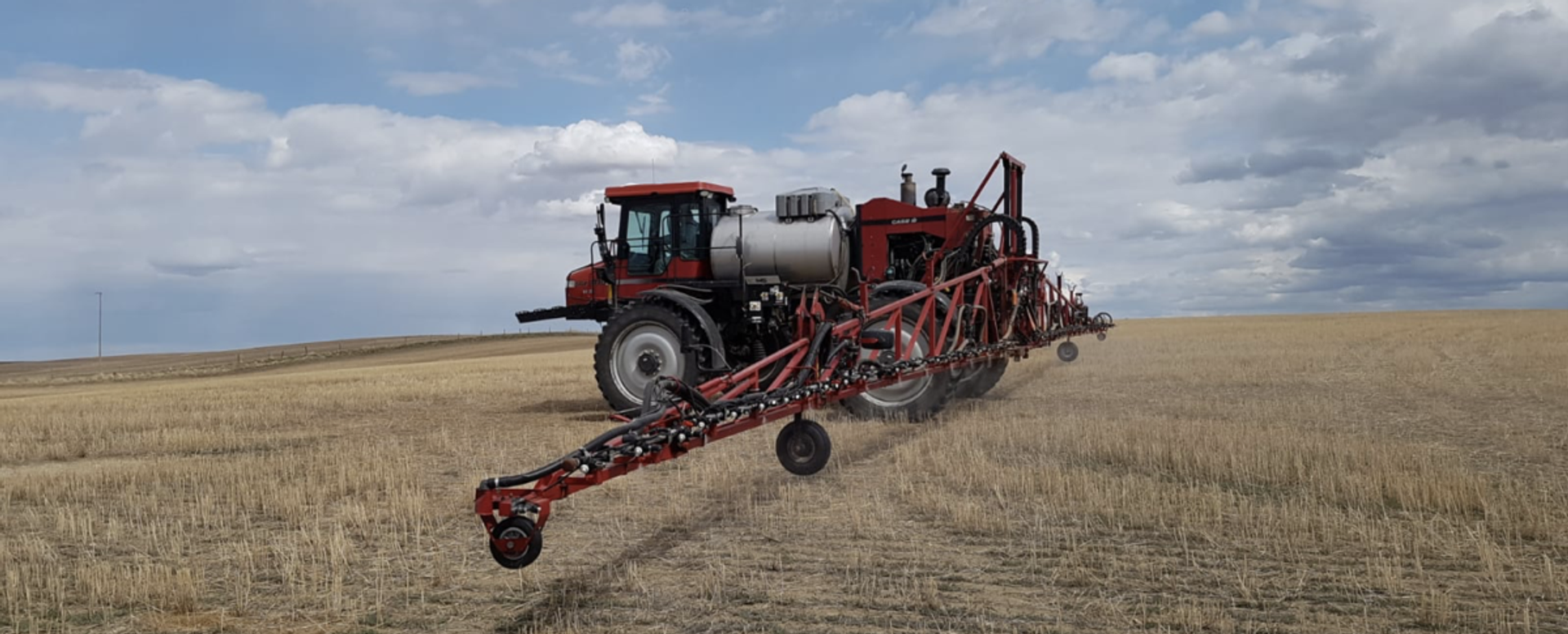
Thinking About Pre-Seed Herbicide Application? How You Can Achieve The Best Results With Your Pre-Seed Herbicides This Year.

2026-03-23
Depending on where you farm and variable weather common this time of year, pre-seed herbicide application time is still weeks away, so there is still time to think about how to maximize your pre-seed herbicide application this year.
The better the conditions at the time of application the better your weed control will be. Plants must be actively growing, with new green leaves and new growth emerging from the center of the plant.
When is it too cold to apply? Below are some temperature requirements and recommendations for best results with pre-seed herbicide application:
- Daytime temperatures: If the daytime temperature is forecasted to reach a minimum 8-10°C during the day, plan to spray once the temperature reaches a minimum 5°C. It is best to spray in the morning or early afternoon as temperatures rise throughout the day. Avoid application into the evening if the temperature is to drop below 10°C. In this case, stop spraying 1.5 to 2 hours before sunset or before it drops below 10°C. This allows time for the product to move from the leaves to the growing points of the plants
- Overnight lows around 0⁰ to - 2⁰ Celsius: Begin spraying once the temperature is +5⁰ Celsius and rising. Stop application when temperatures begin to drop.
- Overnight low ranging from - 2⁰ to - 5⁰ Celsius: If you must spray, begin spraying once the temperature has been + 5⁰ Celsius for a minimum of 2 hours and rising, assuming there is active plant growth. Stop application when temperatures start to drop. Control will likely be reduced and slower as compared to spraying on a warmer day.
- Overnight low of - 5⁰ Celsius or colder: Do not spray. Wait for at least several days of overnight lows that are 0⁰ Celsius or warmer + active plant growth.
- If dandelions or quackgrass are present wait at least 48 hours after frost and until you see active growth before choosing to spray.
Apply early or wait?
If you have been dealing with a particularly problematic field, or problem weeds such as kochia, Russian thistle, narrow-leaved hawk’s-beard, or other hard to kill weeds, consider delaying your pre-seed herbicide application to allow these weeds to germinate, be in a better stage for application, or for the weather to improve, which will increase the probability of getting better control prior to seeding. Some products also have post-seeding application options but be careful – once the crop is emerged it can be injured by your pre-seed herbicide, so check the label thoroughly before considering a post-seeding application.
Maintain recommended water volumes
It is important to maintain your water volumes for pre-seed application, as many weeds are likely small, plus growth may be slower due to cool temperatures. This is especially important if you are applying a contact herbicide where coverage is critical to maintain performance.
Follow label recommended application rates
As with water volume, application rates are important to maintain performance. Do not cut back rates as performance can be reduced.
Contact or systemic herbicides – which is better?
For some crops, you can choose either contact or systemic herbicide options. Both have strengths and weaknesses.
- Contact herbicides usually act quickly, but only control the part of the plant on which they were sprayed, so lots of water and warm sunny temperatures are important. Contact herbicides usually have little residual activity, so they are well suited for sensitive crops such as pulses or canola.
- Systemic herbicides are absorbed by the plant and taken into the root system for complete control, but rely on good growing conditions for best control, so cool conditions are not ideal. Depending on the product they can have residual activity, so they are often best suited for cereal crops.
- Contact and systemic herbicide combinations can sometimes be better than either product alone. For comparison, the chart below lists common pre-seed herbicide groups. The most common herbicide groups for pre-seed are 2, 4, 6, 9, 13, 14 and 15. It can be confusing - if you are not sure how to choose a product, contact your AgraCity representative and they can help you choose the best products for your pre-seed herbicide needs this year.
The Mode of Action, Site of Uptake, and Symptoms of Different Herbicide Groups
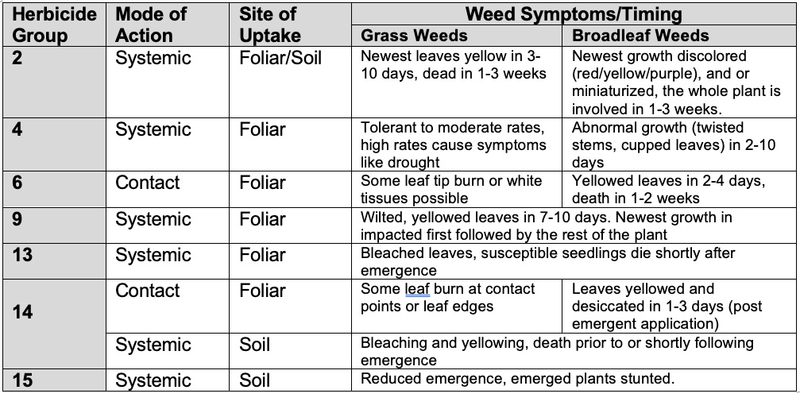
Information in this chart courtesy of Saskatchewan Guide to Crop Protection.
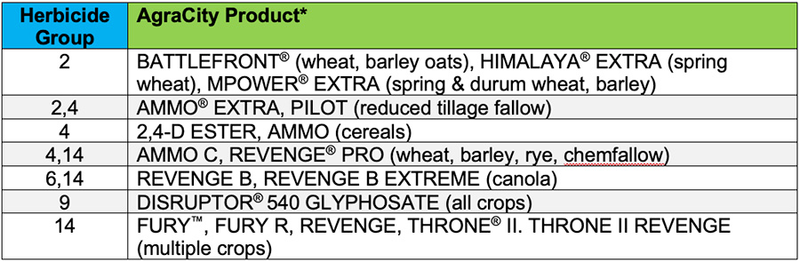
*see product label for labelled crops, use patterns and weeds controlled. Always read and follow label directions before product application.
AgraCity can help.
AgraCity has a complete line-up of pre-seed products for every acre on your farm. Just go to AgraCity.com or call AgraCity at 1-844-269-3276 and one of our agronomists can help you find the best performing, cost competitive product for all your acres this year.
AMMO®, BATTLEFRONT®, DISRUPTOR®, HIMALAYA®, MPOWER®, PILOT®, REVENGE® and THRONE® are trademarks of NewAgco Inc. or its affiliates.
FURY™ has been applied for as A NewAgco Inc. trademark and is pending approval.
All other products mentioned are trademarks of their respective holders.