


Weeds Are Everywhere This Year. Could Yours Be Herbicide Resistant?

2026-09-30
With variable weather and higher rainfall in many parts of western Canada this year, weed pressure appears to be higher than in previous years, which might have you asking if you have herbicide resistant weeds on your farm.

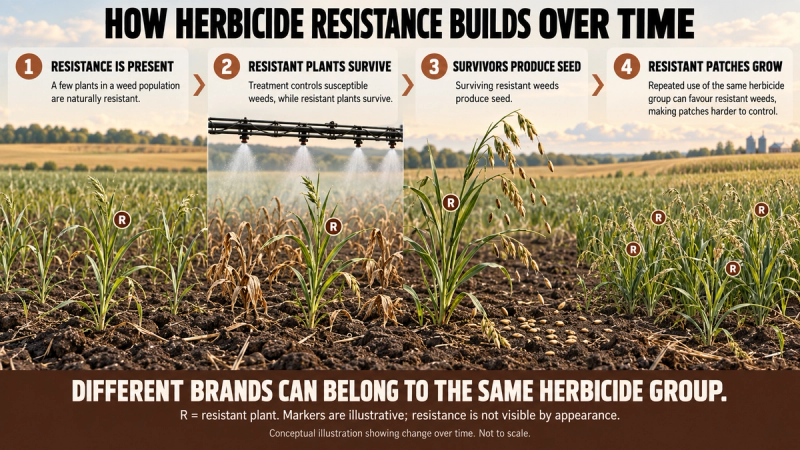
How do herbicide resistant weeds develop?
Resistant plants occur naturally at very low frequencies, with different levels of genetic variability within individual weed populations. Herbicide resistant weeds develop when the same herbicide group is repeatedly used on a weed population, resulting in susceptible plants being killed while resistant plants survive and produce seed. Initially there would be a few herbicide resistant weeds in small patches, but over time the number of resistant weeds increase into larger patches and become more noticeable and difficult to control.
With the growing number of herbicide brands, sometimes you may not be aware that the herbicide you are applying is from the same herbicide group you have used previously.
How can you determine if you have herbicide resistant weeds on your farm?
- Keep an eye out for weed patches that are growing larger and becoming difficult to control. If you notice these patches, flag them or make a note of where they are for seed collection and future reference.
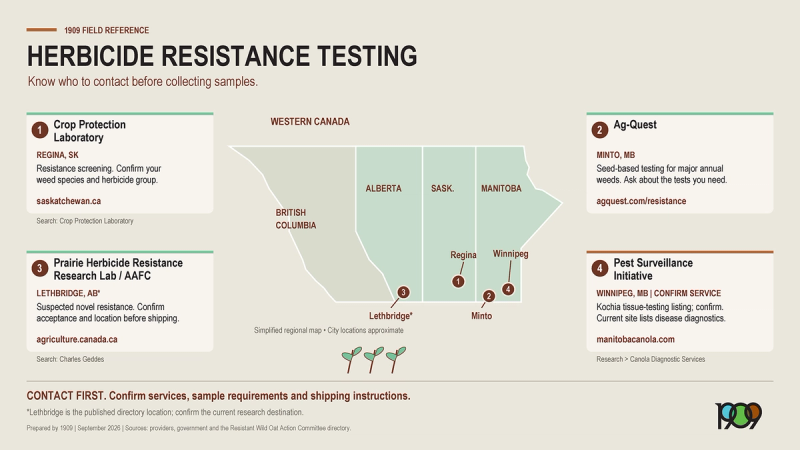
- If you do find patches of what might be herbicide resistant weeds, it is advisable to send samples of suspected herbicide resistant weed seeds for testing. There are several organizations that can test for herbicide resistant weeds.
We can help. If you have questions about managing herbicide resistant weeds, call us at 1-844-269-3276 and speak to your sales rep or our agronomist.

Talk with your 1909 representative
1909 has competitive prices on a complete line of fungicides, herbicides, inoculants, micronutrients, foliars and desiccants. Talk to your local 1909 business representative, go to 1909.ufa.com or call 1-844-269-3276 to discuss how 1909 can help manage your input costs.