

The Most Common Questions on Pre-seed Herbicide Application this Year

2026-09-10
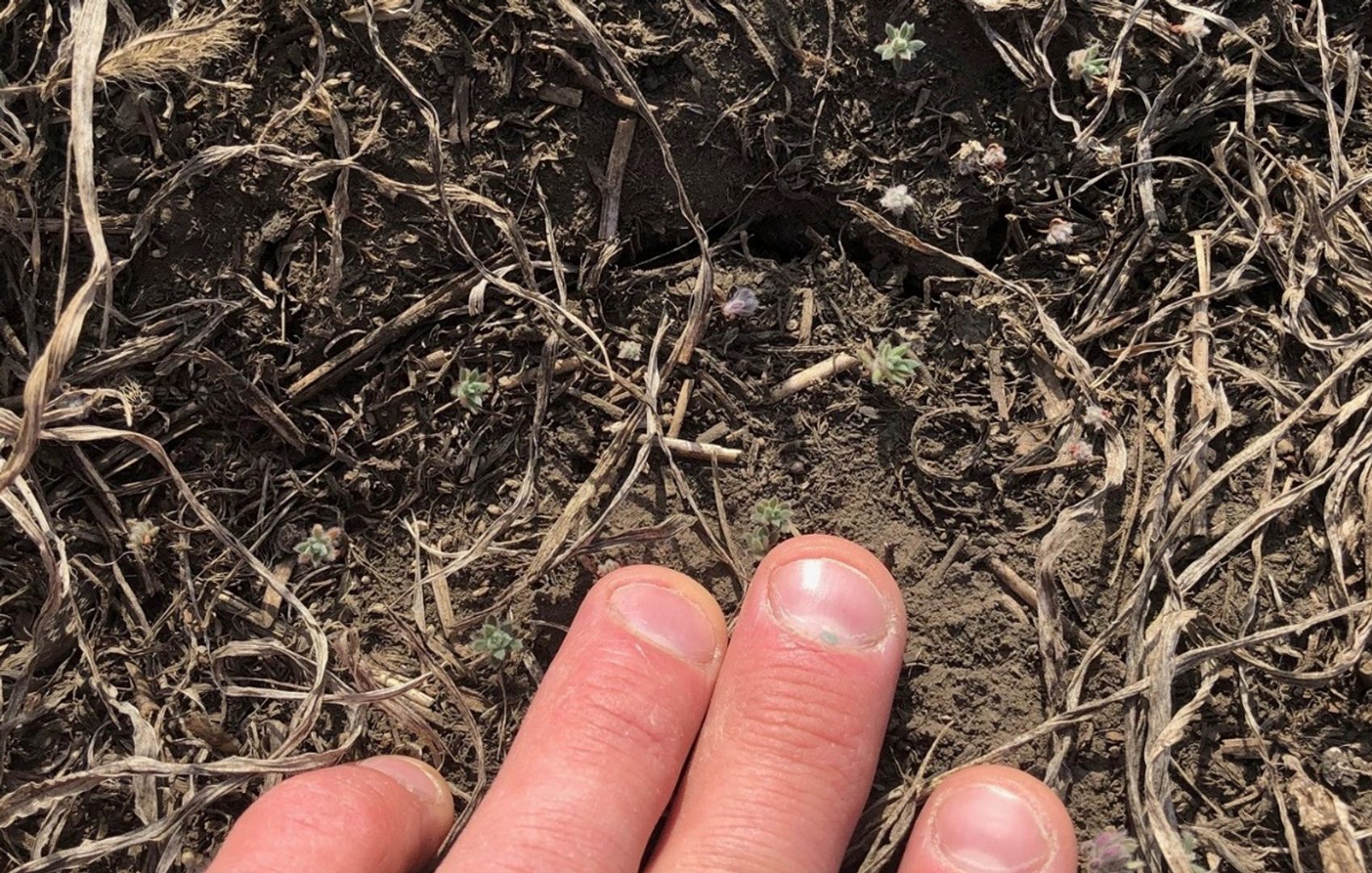
With the variable weather conditions in many parts of western Canada, with some areas being very wet and cold and other areas being warm and dry, there have been a number of questions about the value of a pre-seed herbicide application.
QUESTION #1:
I do not see much weed growth on my fields right now. Is it still worthwhile to do a pre-seed application?
ANSWER:
Yes. Even though a field might not be visibly greening up from the road, chances are weed growth will still be occurring or will occur when the weather warms up or a small rain shower occurs. Experience has shown that a pre-seed application will keep fields cleaner even if there is little visible weed growth right now.

QUESTION #2:
Should I still be using glyphosate as part of my pre-seed application program this year?
ANSWER:
Yes. Experience in other years that were similar to 2026 have shown that skipping your glyphosate will result in dirtier fields than expected from the weeds that you don’t see coming.
QUESTION #3:
We have had some very cold temperatures this spring. How warm should it be before applying pre-seed herbicides?
ANSWER:
The better the conditions are at the time of application the better your weed control will be. Plants must be actively growing, with new green leaves and new growth emerging from the center of the plant.
- Daytime temperatures: If the daytime temperature is forecasted to reach a minimum 8-10°C during the day, plan to spray once the temperature reaches a minimum 5°C. It is best to spray in the morning or early afternoon as temperatures rise throughout the day. Avoid application into the evening if the temperature is to drop below 10°C. In this case, stop spraying 1.5 to 2 hours before sunset or before it drops below 10°C. This allows time for the product to move from the leaves to the growing points of the plants
- Overnight lows around 0⁰ to - 2⁰ Celsius: Begin spraying once the temperature is +5⁰ Celsius and rising. Stop application when temperatures begin to drop.
Overnight low ranging from - 2⁰ to - 5⁰ Celsius: If you must spray, begin spraying once the temperature has been + 5⁰ Celsius for a minimum of 2 hours and rising, assuming there is active plant growth. Stop application when temperatures start to drop. Control will likely be reduced and slower as compared to spraying on a warmer day. - Overnight low of - 5⁰ Celsius or colder: Do not spray. Wait for at least several days of overnight lows that are 0⁰ Celsius or warmer + active plant growth.
- If dandelions or quackgrass are present wait at least 48 hours after frost and until you see active growth before choosing to spray.
QUESTION #4:
How long after seeding can I wait before doing a pre-seed herbicide application?
ANSWER:
For most products the longest you would want to wait is 2 days, as the crop can quickly emerge under good growing conditions and any crop that is emerged at the time of application could be killed by the glyphosate component of your pre-seed herbicide.
QUESTION #5:
Should I consider a pre-seed herbicide with some residual to help control weeds that emerge later?
ANSWER:
Yes. If you are growing a cereal crop, then products like BATTLEFRONT® HERBICIDE, same active as Corteva’s PrePass™ Flex, or PILOT® HERBICIDE same active as Corteva’s Korrex™, can provide you with some residual control of weeds such as volunteer canola. Just remember that the residual weed control will be reduced under warm moist conditions.
QUESTION #6:
Since spring in my area is later this year, can I cut my application rate of glyphosate or other pre-seed products?
ANSWER:
Although it is a later spring in some areas, caution is advised when cutting herbicide application rates, as weed control can be reduced, particularly on hard to kill weeds such as dandelion, flixweed, kochia, or narrow-leaved hawk’s-beard. Always check the product labels involved as some weeds will be controlled at lower rates, but some will not.
QUESTION #7:
Do I have to use 10 gallons/acre of water for pre-seed herbicide application?
ANSWER:
10 gallons/acre will provide the most consistent pre-seed weed control regardless of the conditions, especially if weeds are very small and growing slowly. This is especially important for contact herbicides such as REVENGE® HERBICIDE (carfentrazone) based products. Always check the product label for recommended water volumes.
HAVE QUESTIONS? Call 1-844-269-3276 and press “3” to speak to our experienced agronomist.
BATTLEFRONT® HERBICIDE, PILOT® HERBICIDE and REVENGE® HERBICIDE are trademarks of 1909 or its affiliates. All other products mentioned are trademarks of their respective holders.