


Choosing the Right Fertilizers for Successful Canola Cultivation

2026-09-17
Canola farming in Western Canada presents a unique set of challenges and opportunities. To ensure a successful harvest and maximize yields, selecting the appropriate fertilizer is crucial. In this guide, we delve into the key considerations for choosing the right fertilizer blend which aligns with your canola crops’ needs.

Understanding Canola’s Nutritional Needs
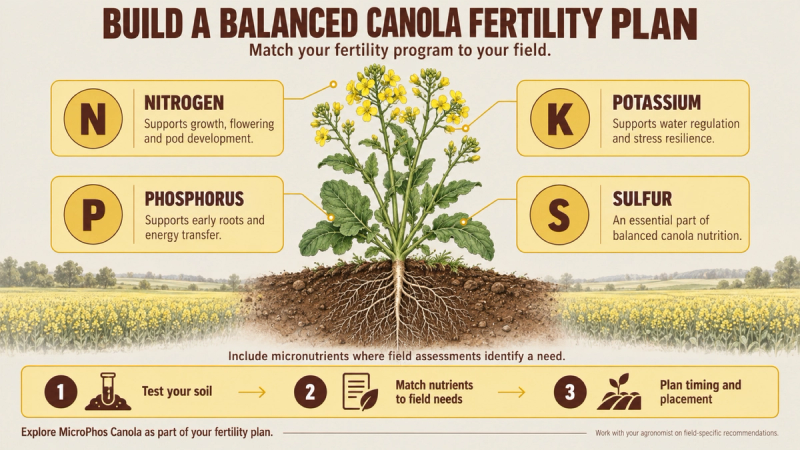
Nitrogen (N)
Canola requires a significant amount of nitrogen for healthy growth and robust yields. Adequate nitrogen helps in promoting vegetative growth, flowering, and pod development. However, excessive nitrogen can lead to delayed maturity and lodging.
Phosphorus (P)
Phosphorus plays a critical role in root development, energy transfer, and overall plant vigor. It is essential during early growth stages to establish a strong root system, which is vital for nutrient uptake.
Potassium (K)
Potassium aids in water uptake, disease resistance, and overall plant health. Ensuring sufficient potassium levels supports canola’s resilience against environmental stressors.
Sulfur (S)
In Western Canada canola demands more sulfur than any other major crop as it is essential for oil synthesis. Ensuring there is enough available sulfur is very important to canola production. Growers want to be certain there is 15 to 20 lbs of sulfur is available during the growing season. Continuous application of elemental sulfur is an excellent way to ensure sulfur is available in the years canola is grown.
Micronutrients
Micronutrients like boron, zinc, and manganese are required in trace amounts for optimal growth and development. These nutrients are often found in slow release fertilizers.
Choosing the Right Fertilizer Type
Macronutrient Blends: Nitrogen (N), phosphorus (P), potassium (K) and Sulfur (S) are the four macronutrients, and having a balanced blend of these nutrients which suits your crops is key.
Slow-Release Fertilizers: Slow-release fertilizers gradually release nutrients over time, providing a sustained season-long supply to the plants. These can be particularly beneficial for canola as it requires nutrients throughout the growing season.
Organic Fertilizers: Organic fertilizers contribute to soil health and microbial activity. Incorporating compost or well-rotted manure enriches the soil’s organic matter content, enhancing nutrient availability.
Considerations for Application
Soil Testing: Conduct a thorough soil test to assess nutrient levels and pH. This information guides you in making informed decisions about the types and quantities of fertilizers to apply.
Fertilizer Timing: Apply fertilizers at the right time to meet the crop’s changing nutrient requirements. The application of slow-release fertilizers while seeding will help optimize nutrient uptake.
Placement Techniques: Banding macro nutrient blends away from the seed and slow-release fertilizers near the root zone will ensure efficient nutrient absorption.
Sustainability Considerations
Nutrient Management Planning: Develop a nutrient management plan that considers the long-term sustainability of your soil. Proper nutrient management minimizes nutrient losses and promotes environmental stewardship.
Integrated Approaches
Integrate fertilization practices with other sustainable farming techniques, such as cover cropping and conservation tillage, to enhance nutrient cycling and soil health.
In conclusion, the right choice of fertilizers is pivotal for successful canola production.. By understanding the specific nutritional needs of canola, and applying them strategically, you can optimize yields, enhance crop health, and contribute to the sustainability of your farming practices.
Each field’s requirements will vary, so working closely with fertility experts and conducting regular soil testing will help tailor your fertilizer regimen to your specific conditions. With careful planning and informed decisions, you can nurture a thriving canola crop that benefits both your farm and the environment.

1909 Solutions
MicroPhos MicroPack
MicroPhos MicroPack provides your crop with everything it requires to maximize yields. Powered by Power Phos, surrounds the phosphorous granule in a water-soluble negatively charged “shield”. The Power Phos shield attracts and binds the ions that tie up phosphorus making it more available to your crop.
Related reading
Continue exploring crop nutrition with these articles:
- The Nutrients Needed to Maximize Yields – Micro-Phos
Learn about the roles of essential nutrients in crop growth and development. - Three Benefits of Using Micro-Phos
Explore the product’s features and its role in crop nutrition. - Suspect a Nutrient Deficiency? Start Here!
Learn how to recognize possible deficiency symptoms and use soil and tissue testing to guide your crop nutrition plan.considerations for canola.